Programs
IDMERTC
The Infectious Diseases and Medical Entomology Research and Training Center (IDMERTC) at the International Center for Excellence in Research (ICER-Mali)
The Malaria Research and Training Center (MRTC) was created in 1992 as a partnership between the “Ecole Nationale de Médecine et de Pharmacie” (ENMP) (currently split into “Faculté de Médecine et d’Odontstomatologie – FMOS” and “Faculté de Pharmacie – FAPH”), the United States National Institute of Allergy and Infectious Diseases at the National Institutes of Health (NIAID/NIH) with the support of other partners such as the University of Rome (La Sapienza), the Rockefeller Foundation and the World Health Organization (WHO). Currently, FMOS, FAPH and MRTC are part of the University of Sciences, Techniques and Technologies of Bamako (USTTB).
Over time, the MRTC has grown and developed collaborations with several other universities and research institutions around the world. Thus, with this collaboration expansion to other Universities and pathologies, the Mali International Center forExcellence in Research (Mali-ICER) was created in 2002 in collaboration with NIH. Mali-ICER is one of the strongest research institutions in Africa that includes three research branches: the Infectious Diseases and Medical Entomology, the Parasites and Microbes Research and Training Center (PMRTC), and the University Clinical Research Center (UCRC).
The IDMERTC, former MRTC-Entomology branch is currently led by Dr. Nafomon Sogoba.
Mission
The mission of IDMERTC is to:
- Train Malian and foreign scientists in the field of medical entomology and epidemiology of emerging and non-emerging vector-borne diseases,
- Conduct basic and operational research on vector-borne diseases for evidence-based decision-making for a better management of these diseases,
- Test new surveillance and control strategies (e.g. vaccines, traps, genetic control tools, etc.) for vector-borne diseases,
- Maintain and strengthen the training and research capacities of USTTB/FMOS and other research infrastructure,
- Provide technical support to national disease control programs (NMCP, filariasis and neglected tropical diseases (NTD), TB/HIV, etc.) and other organizations involved in vector-borne disease control activities,
- Facilitate the establishment of vector-borne disease research networks among African scientists, as well as among their international partners,
- Maintain and expand collaborative programs with the NIH and other research institutions.
Human resources of the IDMERTC
The IDMERTC current staff includes over 80 personnel with 35 having at least a Master’s degree.
Infrastructure and Equipment
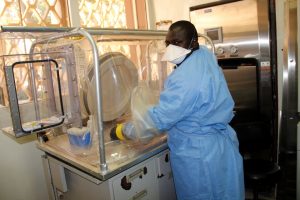
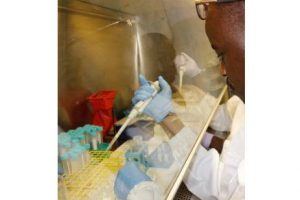
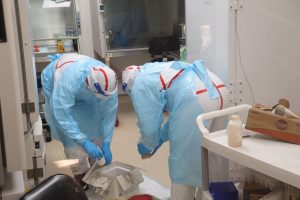
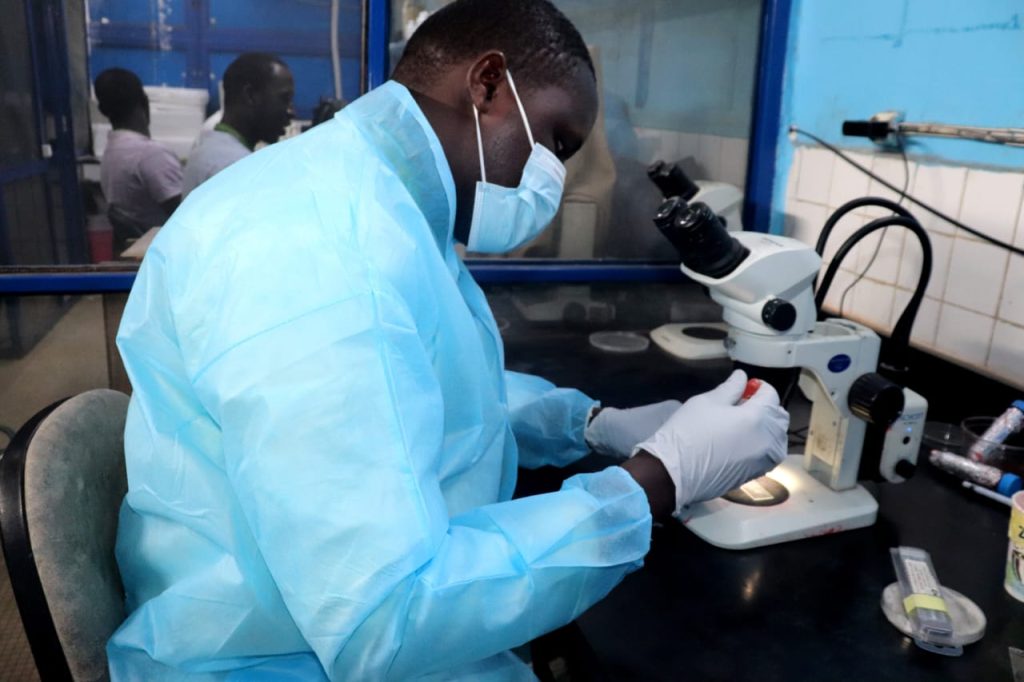
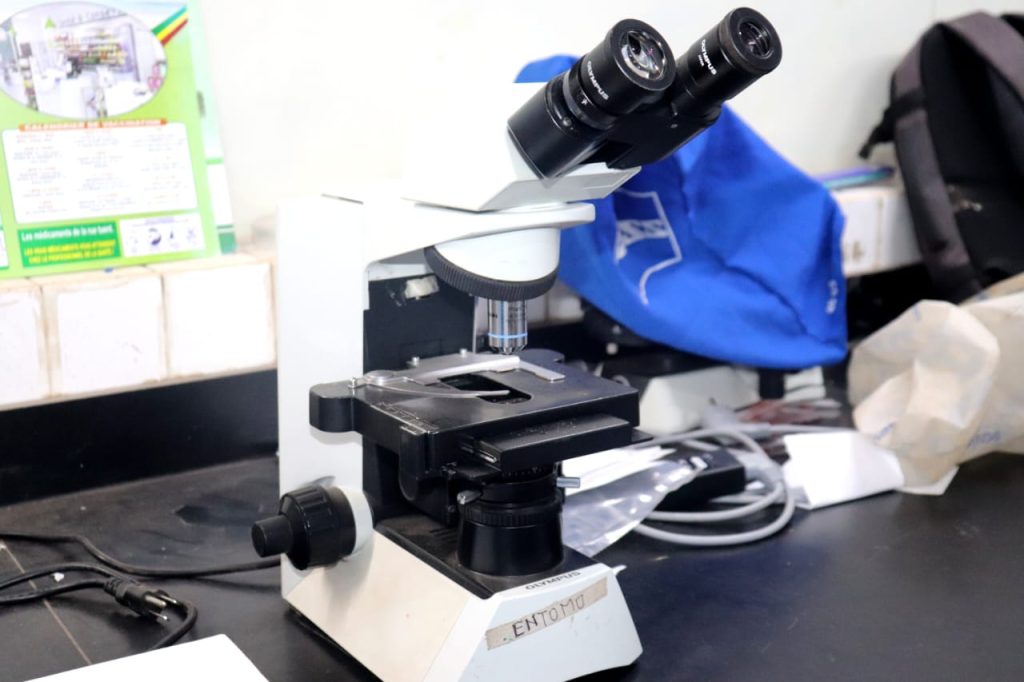
The IDMERTC has six research laboratories well equipped with modern and state-of-the-art technologies. It also has three regular insectaries for mosquito breeding, experimental infections, vaccine testing, and one ACL2 certified for mosquito genetic manipulation. IDMERTC has long-standing field experience and good working relationships with local communities and health staff around the country.
List of some ongoing projects
Ongoing projects at the IDMERTC include:
- Evaluating the efficacy of Pfs230D1-EPA/AS01 in a Controlled Human Malaria Infection transmission model in healthy Malian adults’ – Entomology component. CHMI-Trans Mali, Consortium PfTBV EDCTP2.
- Serosurvey for prevalence and incidence of Lassa virus infection in southern Mali. NIH -19-I-N029.
- Establishing an African Center of Excellence in Molecular Engineering – INV-049156.
- A pilot multisectoral intervention for controlling malaria vectors, mitigating insecticides resistance, and assessing WaSH facilities at health care units in selected costal and Sahelian West African countries – TDR/WHO – P21-00170.
- Windborne long-distance migration of insects. – LMVR/NIH
- Novel marking technique to track mosquito movement in natural conditions – LMVR/NIH.
- Mosquito-based sampling to track SARS-CoV-2 seropositivity in rural communities of Mali – LMVR/NIH.
- Can gene drive for malaria control be safely and sustainably implemented in Africa? – WELLCOME – Collaborative Award in Science.
- Xenomonitoring using a new and more sensitive qPCR technique: an endgame tool for integrated surveillance of lymphatic filariasis in post-mass drug administration in the Bougouni-Yanfolila evaluation unit in the Sikasso region. COR-NTD /USAID.
- Acceleration of elimination of onchocerciasis in Mali – towards high coverage and acceptability of mass drug administration amongst hard-to-reach populations. END-FUND.
- An observational follow-up study of patients involved in LEDoxy studies in Sri Lanka, Mali, and India to investigate the impact of enhanced hygiene measures on the sustainability of lymphedema self-care. COR-NTD /USAID.
- Improving the management of lymphedema in remote hard to reach rural areas through the integration of hygiene measures into the routine care package of community health centers in Mali. COR-NTD /USAID.
- A qualitative exploration to understand the barriers and facilitators related to treatment during mass drug administration among the migrant and mobile populations in Mali. COR-NTD/TFGH through Bill & Melinda Gates Foundation.